The History of the Milwaukee Clipper
From the steamship JUNIATA to the legendary Queen of the Great Lakes.
More Than a Ship — A Century of Great Lakes History
The story of the Milwaukee Clipper begins long before she became one of the most recognizable passenger steamships on the Great Lakes. Her origins date back to 1904 — seven years before the RMS Titanic would enter service.
From the Steamship JUNIATA
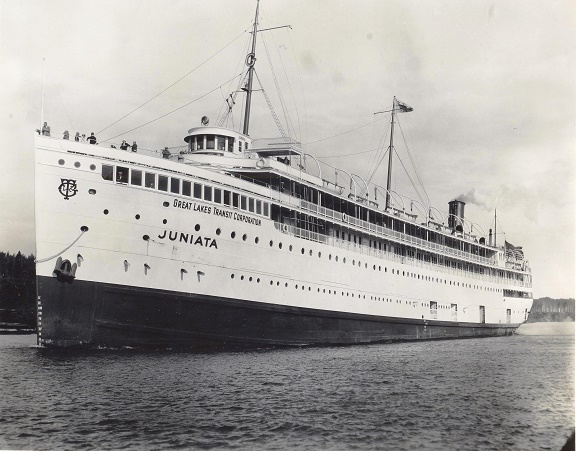
Designed by noted naval architect George Sharp, the steamship JUNIATA was commissioned by the Erie & Western Transportation Company, better known as the Anchor Line, a subsidiary of the Pennsylvania Railroad. She was built by the American Shipbuilding Company at its Cleveland shipyard and launched on December 17, 1904.
The JUNIATA was one of three elegant sister ships operated by the Anchor Line, alongside the S.S. Tionesta and S.S. Octorara. At 361 feet in length, she represented the height of luxury Great Lakes passenger travel during the early twentieth century.
A First-Class Great Lakes Experience
Powered by a remarkable 3,000 horsepower quadruple expansion steam engine — one of only seven of its kind ever built for Great Lakes passenger service — the JUNIATA combined engineering innovation with refined elegance.
Her original ornate wooden superstructure featured richly varnished mahogany woodwork, grand staircases, wicker furnishings, elegant lounges, and fine dining worthy of the finest hotels of the era. Carrying approximately 350 passengers in comfortable stateroom accommodations, the ship sailed between Buffalo, New York, and Duluth, Minnesota.
Reinvented for a New Era
By the late 1930s, the retired JUNIATA was chosen for a bold transformation that would create one of the most advanced passenger steamers on the Great Lakes.
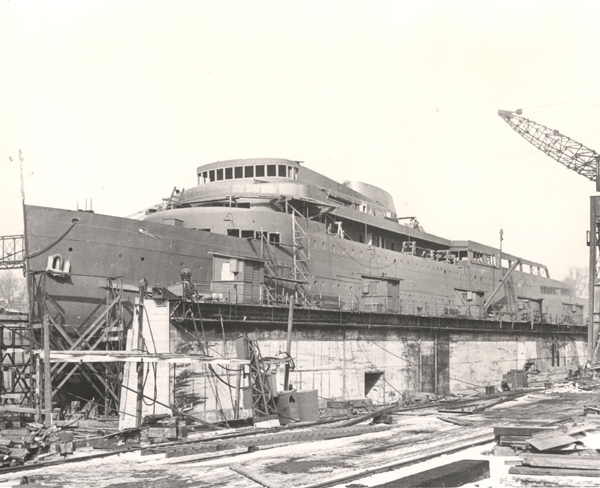
The Birth of the Milwaukee Clipper
In the late 1930s, Muskegon businessmen Max and Mark McKee envisioned a bold future for cross-lake passenger transportation between Michigan and Wisconsin. Originally planning to build an entirely new steamship, rising construction costs led them toward an innovative alternative — transforming an existing vessel.
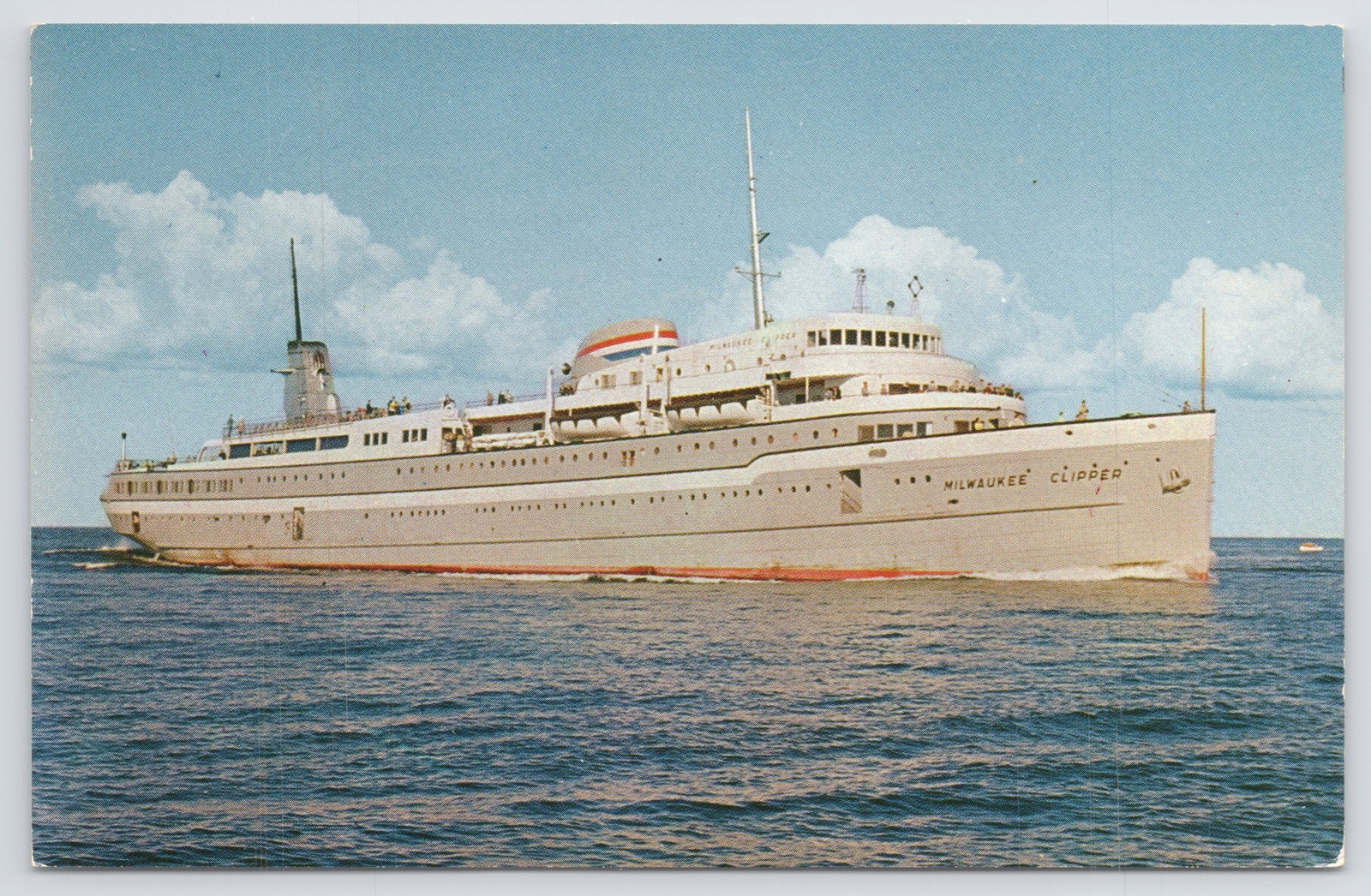
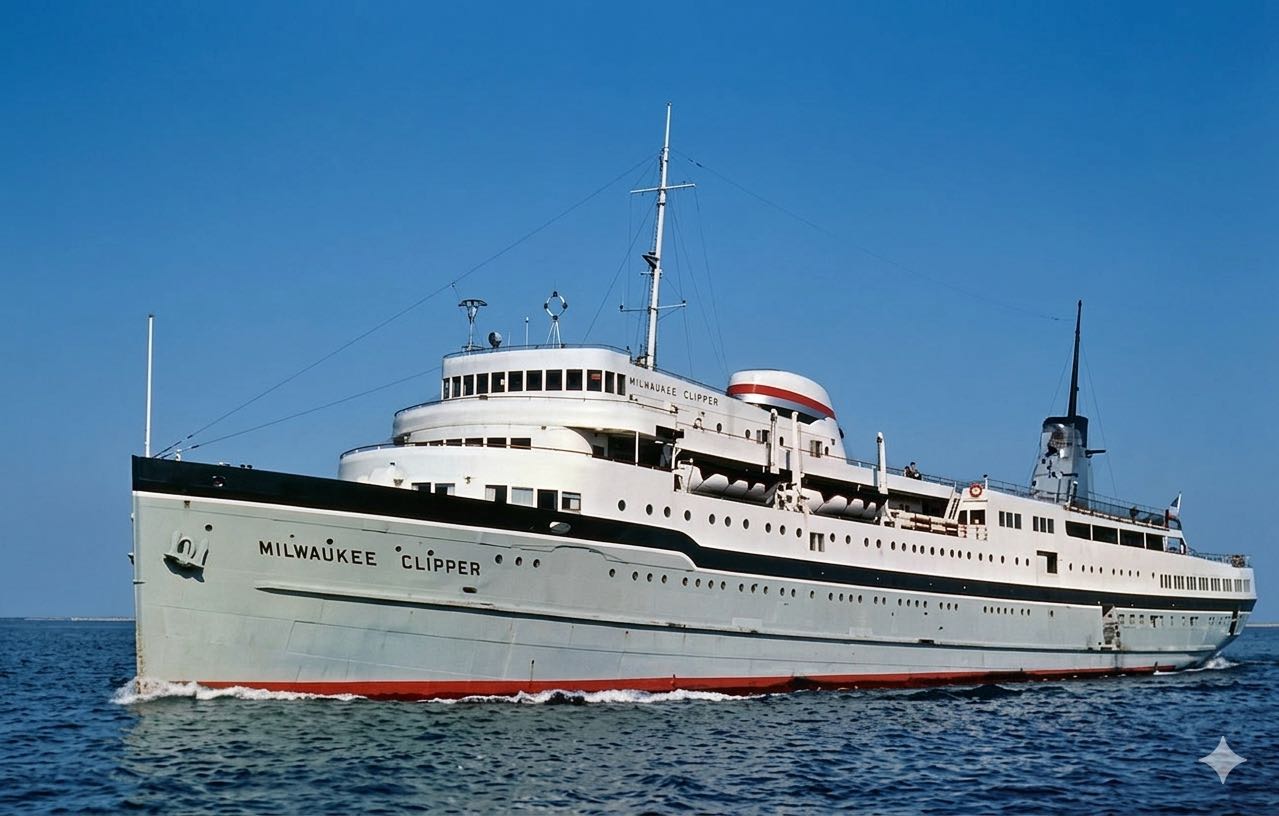
In late 1940, the JUNIATA was taken to the Manitowoc Shipbuilding Company in Wisconsin, where her aging wooden superstructure was completely removed and replaced with a revolutionary all-steel streamlined design — the first superstructure of its type ever constructed for a passenger ship.
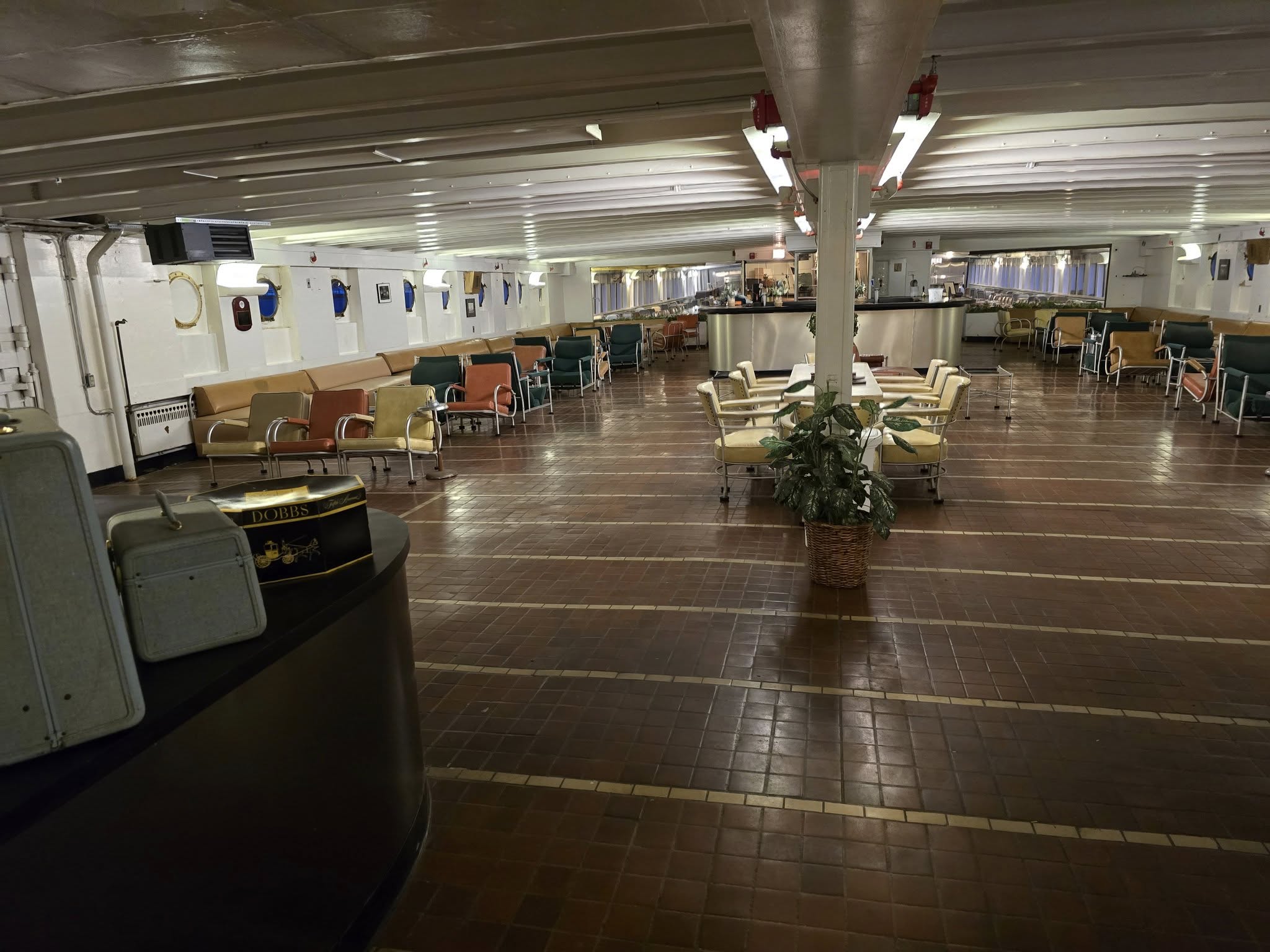
Streamlined, Fireproof, and Elegant
The newly rebuilt vessel featured completely fireproof construction, air-conditioned staterooms, passenger lounges, cocktail bars, a children’s playroom, a movie theater, live entertainment, dancing, and sleek Art Deco styling throughout.
On June 2, 1941, the ship was officially renamed S.S. Milwaukee Clipper, and the following day she embarked on her maiden voyage between Milwaukee, Wisconsin, and Muskegon, Michigan.
Queen of the Great Lakes
From 1941 through 1970, the Milwaukee Clipper carried untold thousands of passengers and automobiles across Lake Michigan, becoming one of the most beloved steamships on the Great Lakes.
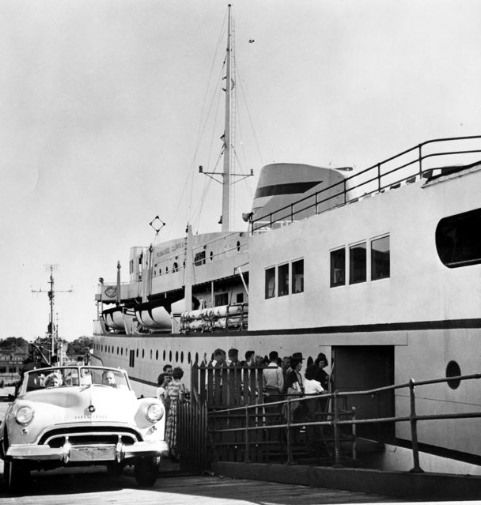
The Golden Age of Cross-Lake Travel
During World War II, the ship played an important transportation role, operating weekday service between Milwaukee and Chicago while continuing weekend crossings to Muskegon. Following the war, the Clipper operated year-round between 1946 and 1963 before transitioning to seasonal summer service during her final operating years.
For generations of travelers, the Milwaukee Clipper represented far more than transportation. Passengers danced to live music beneath elegant Art Deco lighting, relaxed in richly appointed lounges, strolled the promenade decks, watched movies aboard ship, and experienced the romance and adventure of Great Lakes travel.
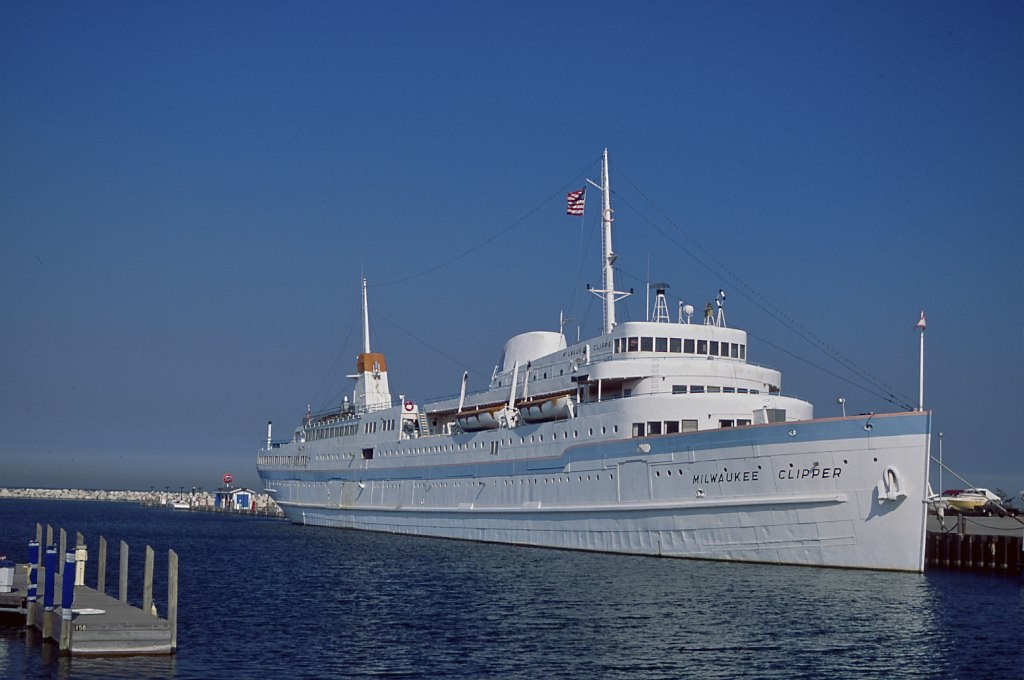
Saved, Recognized, and Returned Home
After passenger operations ended in 1970, the Milwaukee Clipper entered a new chapter. In 1977, she was sold to a Chicago businessman who hoped to operate the vessel in excursion service. Although passenger certification was never obtained, the ship found temporary new life at Navy Pier in Chicago as a floating maritime museum and convention facility under the shortened name S.S. Clipper. This image is when she was in Hammond, Indiana.
In December 1983, the Milwaukee Clipper was listed on the National Register of Historic Places, and in May 1989 she was officially designated a National Historic Landmark.
Return to Muskegon
Later relocated to Hammond, Indiana, the ship was once again renamed Milwaukee Clipper and planned as the centerpiece of a large marina development. However, changing waterfront priorities eventually displaced the vessel once more.
In 1997, a dedicated group of preservationists formed the Great Lakes Clipper Preservation Association with one mission: save the Milwaukee Clipper and return her home to Muskegon. That dream became reality on December 2, 1997, when the legendary steamship returned to Muskegon after an absence of twenty years. She was repainted to her original gray ghost colors around the year 2000.
A Living Piece of Great Lakes History
Today, the Milwaukee Clipper remains one of the last surviving Great Lakes passenger steamships and one of the finest remaining examples of streamlined Art Deco maritime design in the United States.
Remarkably, the vessel still retains the original 1904 hull of the JUNIATA — meaning guests who step aboard today are walking through well over a century of Great Lakes history.
More than a museum ship, the Milwaukee Clipper is a living preservation project and a powerful reminder of an era when crossing the Great Lakes was not simply transportation, but an experience of elegance, craftsmanship, entertainment, and adventure.